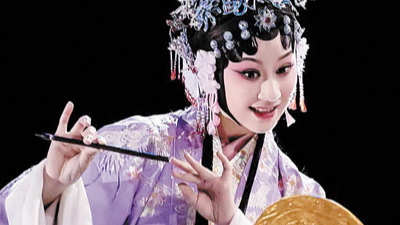
Du Liniang
Overview
Du Liniang is a pivotal character in the Kunqu Opera The Peony Pavilion, a masterpiece of Ming Dynasty (1368-1644) drama written by Tang Xianzu (1550-1616). Her story is one of love, longing, and the triumph over death, encapsulating themes of desire and the supernatural, set against the backdrop of Confucian doctrines dominant during the era. The Peony Pavilion is renowned for its exploration of the tension between individual desires and societal norms, and Du Liniang is at the heart of this narrative.
Character Background
Du Liniang is the young daughter of a high-ranking official, Du Bao. Her character is introduced as a beautiful and sheltered young woman who experiences a moment of freedom when she strolls through her family garden. This brief encounter with the outside world awakens her desires and emotions, which are encapsulated in a dream where she meets a young scholar, Liu Mengmei. This dream becomes pivotal as it leads her into a deep yearning for love, causing her to fall ill and eventually die of love sickness.
The Dream and Death
In her dream, Du Liniang encounters Liu Mengmei, which profoundly impacts her. The dream is so vivid and exhilarating that upon waking, she becomes consumed by her love for Liu, whom she perceives as an idealized figure. This longing is so intense that it leads to her demise. Her death, however, is not the end of her story. It is a transition to a supernatural plane where her spirit, encouraged by the governor of the underworld, seeks out Liu Mengmei, who eventually discovers her portrait and falls in love with it, marking the beginning of their ethereal connection.
Resurrection and Reunion
Du Liniang's character is further defined by her resurrection. After Liu Mengmei discovers her grave and falls in love with her through her painted likeness, his love and faith are so strong that they resurrect her. This act challenges the boundaries between life and death and underscores the central theme of the play: the power of love to transcend societal and physical barriers. Her return to life is not just a reunion with Liu but also a confrontation with her father, Du Bao, where they must prove her resurrection and Liu's worthiness as her suitor.
Symbolism and Themes
Du Liniang symbolizes the struggle between personal desires and societal constraints. Her journey from a sheltered daughter to a dream-driven lover, and eventually to a resurrected figure of love, challenges the Confucian ideals of her time, which emphasized filial piety and social conformity. Her story is a narrative of emancipation, portraying love as a powerful force capable of overcoming the rigid moral codes of society.
Cultural Impact and Legacy
The character of Du Liniang has become iconic in Chinese cultural history, embodying the timeless theme of undying love. Her story in The Peony Pavilion has been adapted numerous times across various mediums, including theater, opera, and film. The narrative's enduring appeal is evident in its continual reinterpretation, such as the youth version produced by renowned writer Kenneth Hsien-yung Pai, which revitalized interest in Kunqu Opera among younger audiences. This adaptation highlights Du Liniang's relevance and resonance with contemporary themes of love and individuality. Article reference1. Kunqu Opera is a hard act to follow. chinadaily.com.cn. 2024Photo Gallery(6 pictures)CategoriesLiteratureTagChinese Classical LiteratureOpera and DramaLiterary FiguresRelatedTang XianzuCatalogue1. Overview2. Character Background3. The Dream and Death4. Resurrection and Reunion5. Symbolism and Themes6. Cultural Impact and Legacy- - - []








